Greater Creative Region: five territories, one shared circulation of ideas and creativity
Article author :


Between Wallonia, Luxembourg, Grand Est in France, Saarland and Rhineland-Palatinate in Germany, an informal movement has been linking digital creative ecosystems since 2025. Neither a cluster, nor an NGO, nor a European program: the Greater Creative Region is being built from the ground up, starting with fieldwork and encounters. An investigation among the network leaders driving it, and the rising talents who could well become its best ambassadors.
Five territories, three languages, several political systems, and yet a shared history that predates the European treaties. It is here, across this space straddling Wallonia, Grand Est, Lorraine, the Grand Duchy of Luxembourg, Saarland and Rhineland-Palatinate, that the invention of the printing press transformed the circulation of ideas during the Renaissance. It is here that the Mundaneum in Mons laid the foundations of the information society ahead of its time. It is here too that the first steps of European construction were negotiated, from the European Coal and Steel Community agreements to Schengen. Ideas, creativity, and running through it all, their free circulation.
“We’re at a crossroads of passage,” summarizes Sébastien Nahon, manager of the Media Innovation & Intelligibility Lab (MIIL) at UCLouvain and one of the founding members of the Greater Creative Region. He sees a rare specificity in it: four cultures that have always exchanged with one another without the need to work together ever really being articulated. “There’s a kind of unconscious feeling that we have something to do together,” he explains, unlike an axis such as Brussels-Paris where the relationship flows naturally and declares itself on its own.
Scattered gems, in search of a thread
Because the groundwork already existed, scattered about. Over a few years, each territory saw its own venues and gatherings for digital and immersive creativity emerge: 1535° in Differdange and Spektrum in Rumelange (Luxembourg), Dock11 in Saarbrücken, Bliiida and the Constellations festival in Metz, the Luxembourg immersive pavilion, the KIKK Pavilion, the Forge Videomapping Festival at Völklinger Hütte in Saarland, Mons en Lumière, the Mainz Licht Festival, KIKK itself, La Grand Poste in Liège, the Interreg “Grace” and “CinEuro Film Lab” programs, research centers like K8 in Saarland on digital aesthetics, UCLouvain’s MIIL or UMons’s Click on human-machine interaction, dance-and-technology companies like Ultreïa in Grand Est or Okus Lab in Wallonia, all the way to the “Serious Play Europe” convention in Mainz in Rhineland-Palatinate, also home to the German public broadcaster ZDF. So many gems, each energizing its own ecosystem, without necessarily knowing one another.
A dynamic born from an encounter, not a specification sheet
The story begins in 2024. Delphine Jenart was then running wake! by Digital Wallonia the mission entrusted to KIKK by Wallonia to federate digital creative businesses. On the ground, one observation stood out: the sector’s structures, often freelancers or very small businesses, often lack the means or critical mass to aim straight for distant export markets. “Think first about how to get to Japan, the United States, or Korea. Whereas Germany and Luxembourg — that’s already international,” she sums up. Cross-border cooperation emerges as a first step toward internationalization.
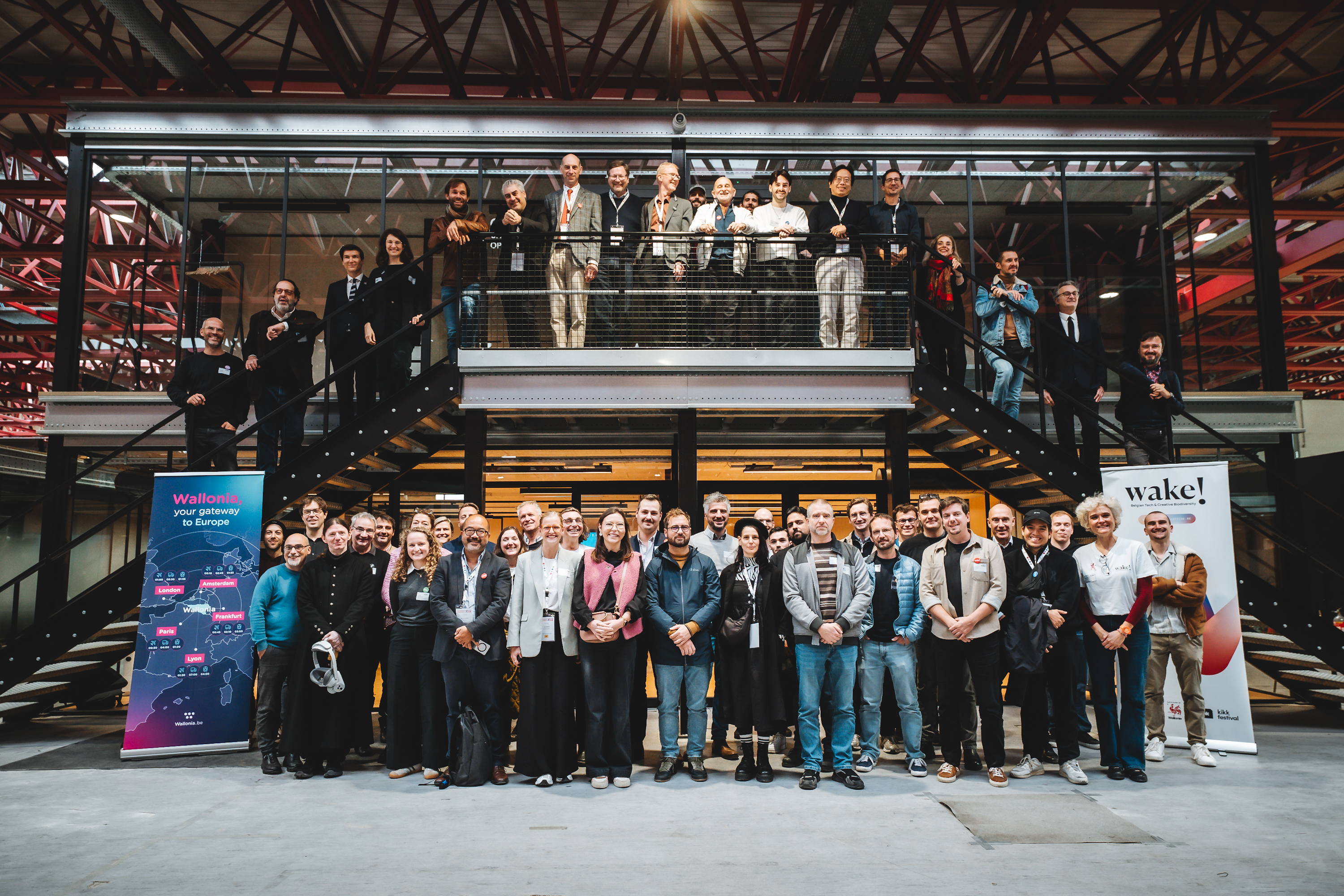
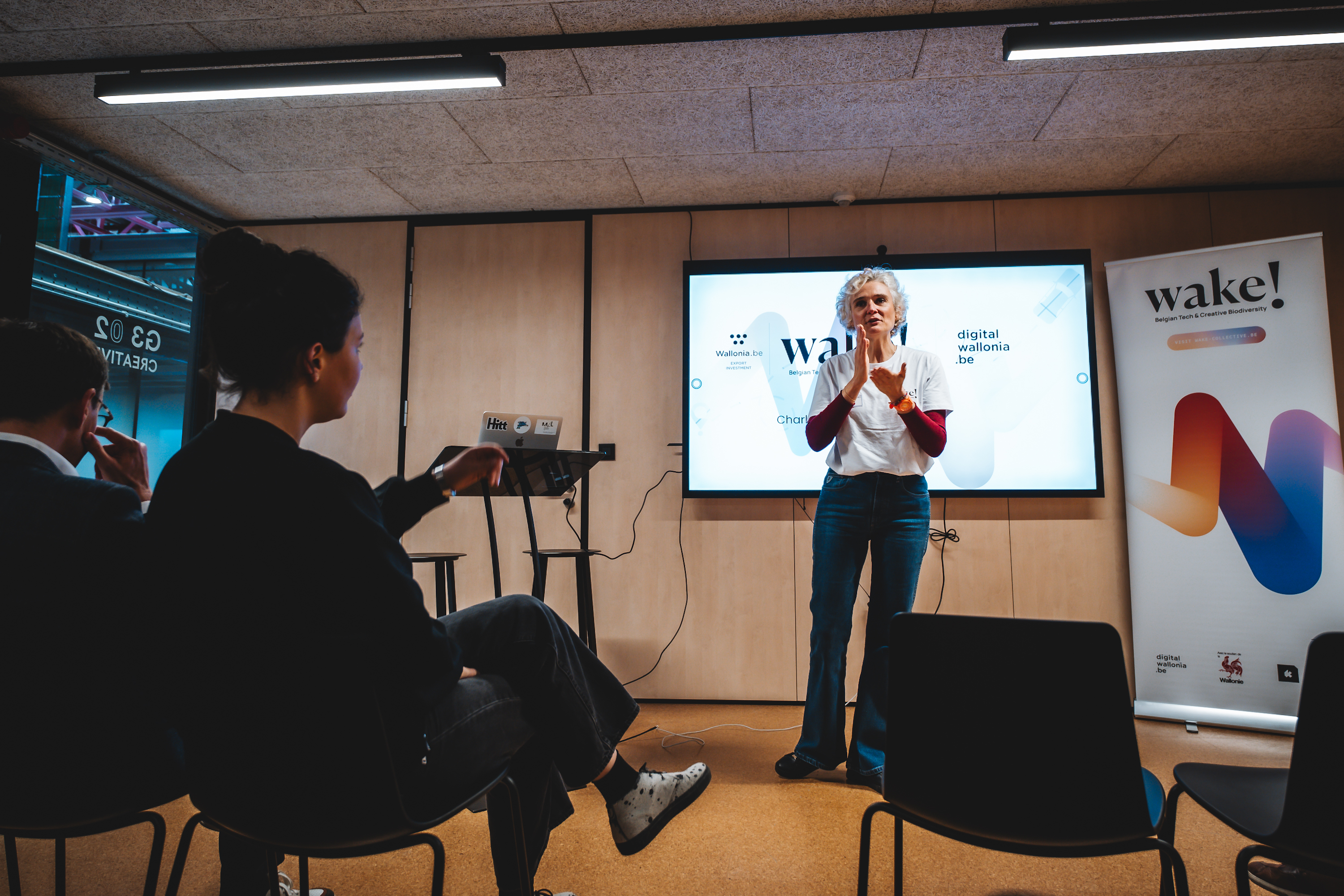
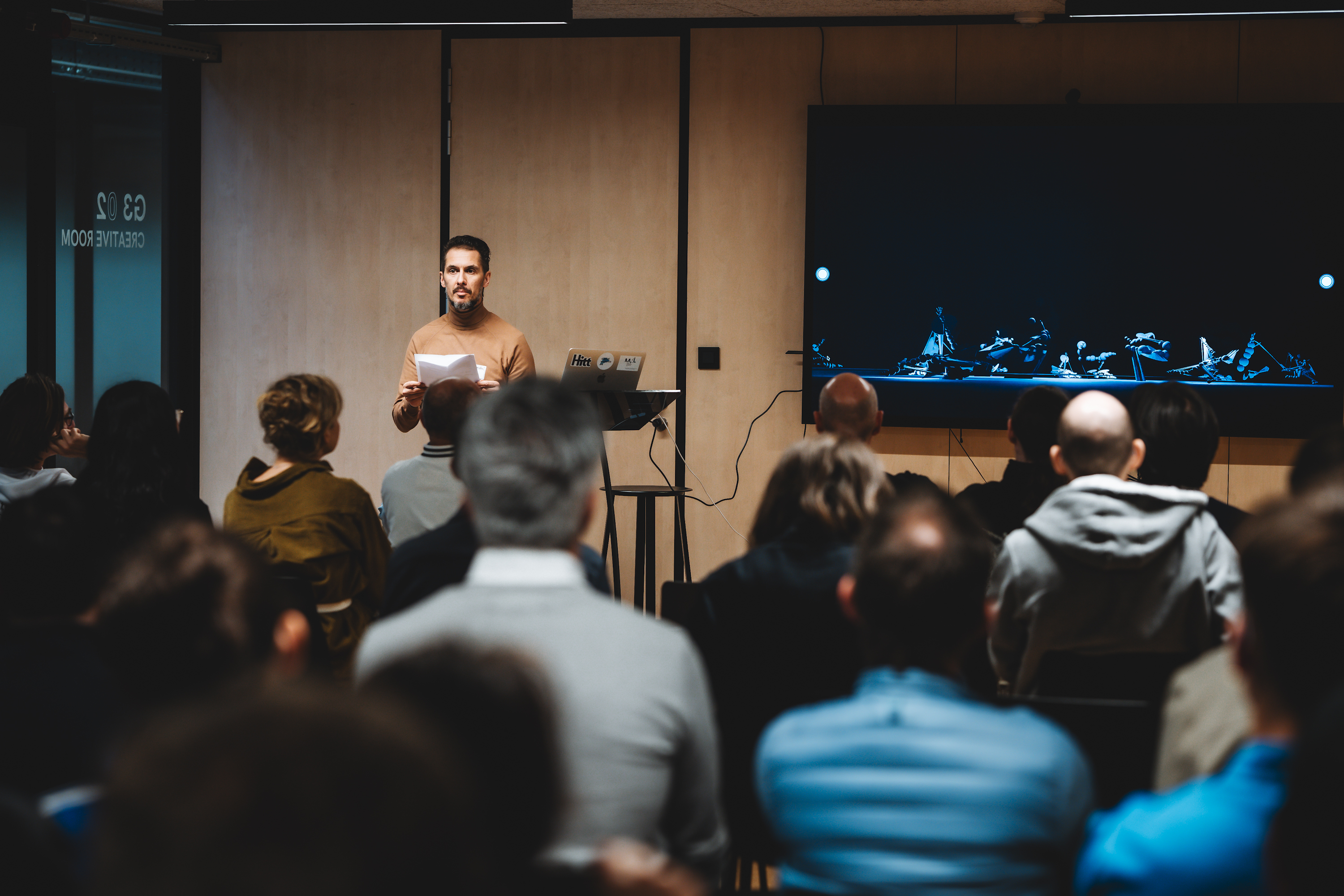
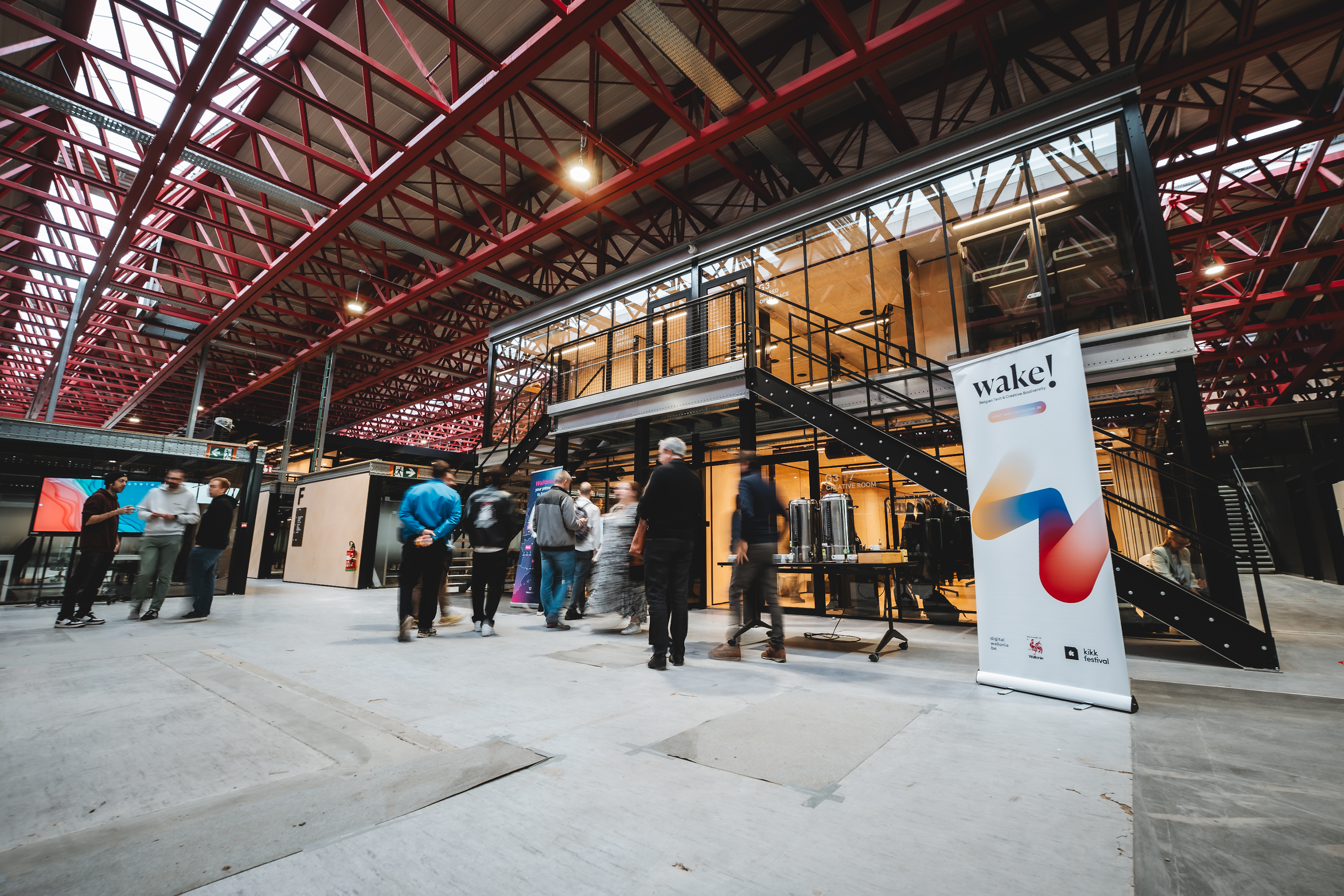
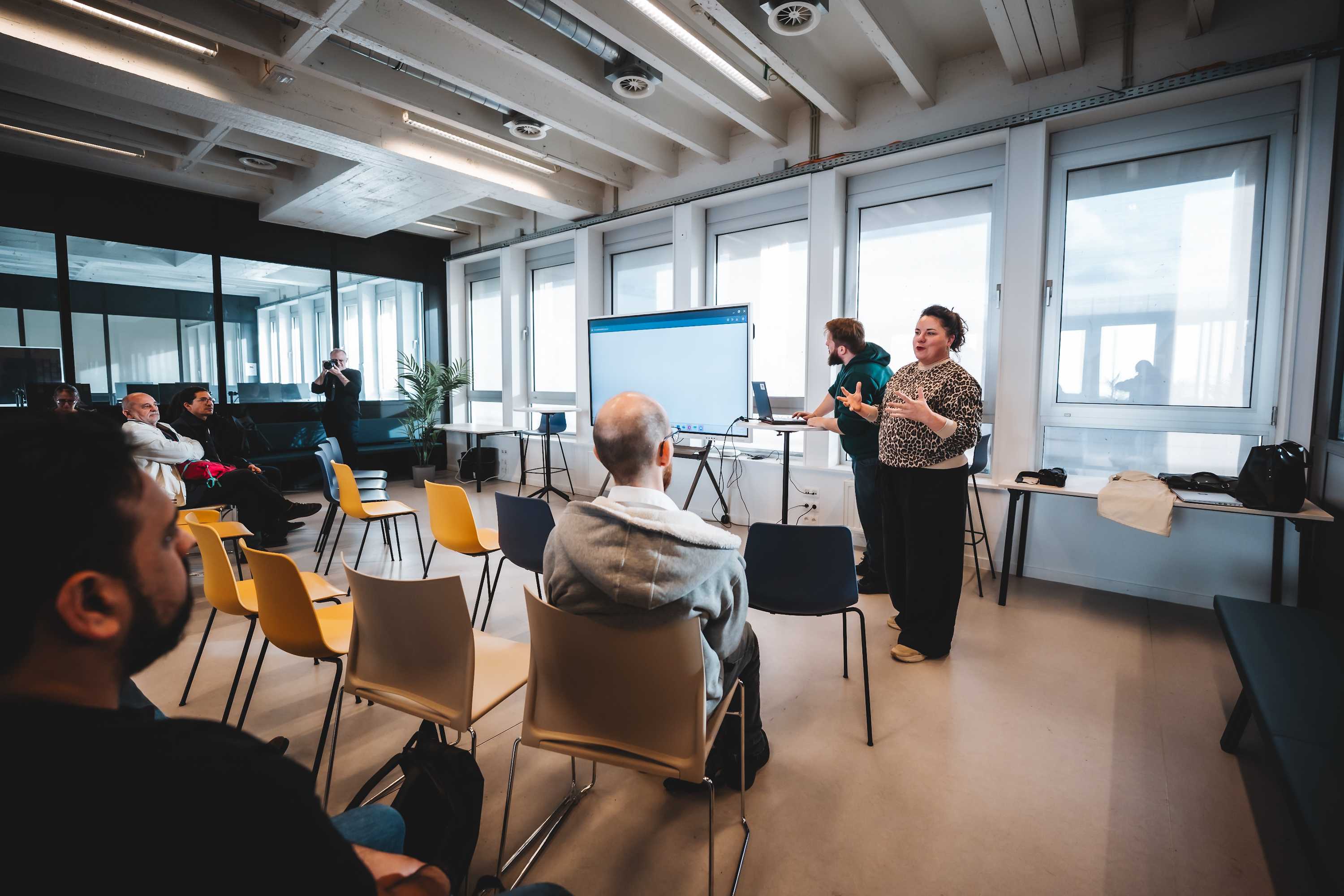
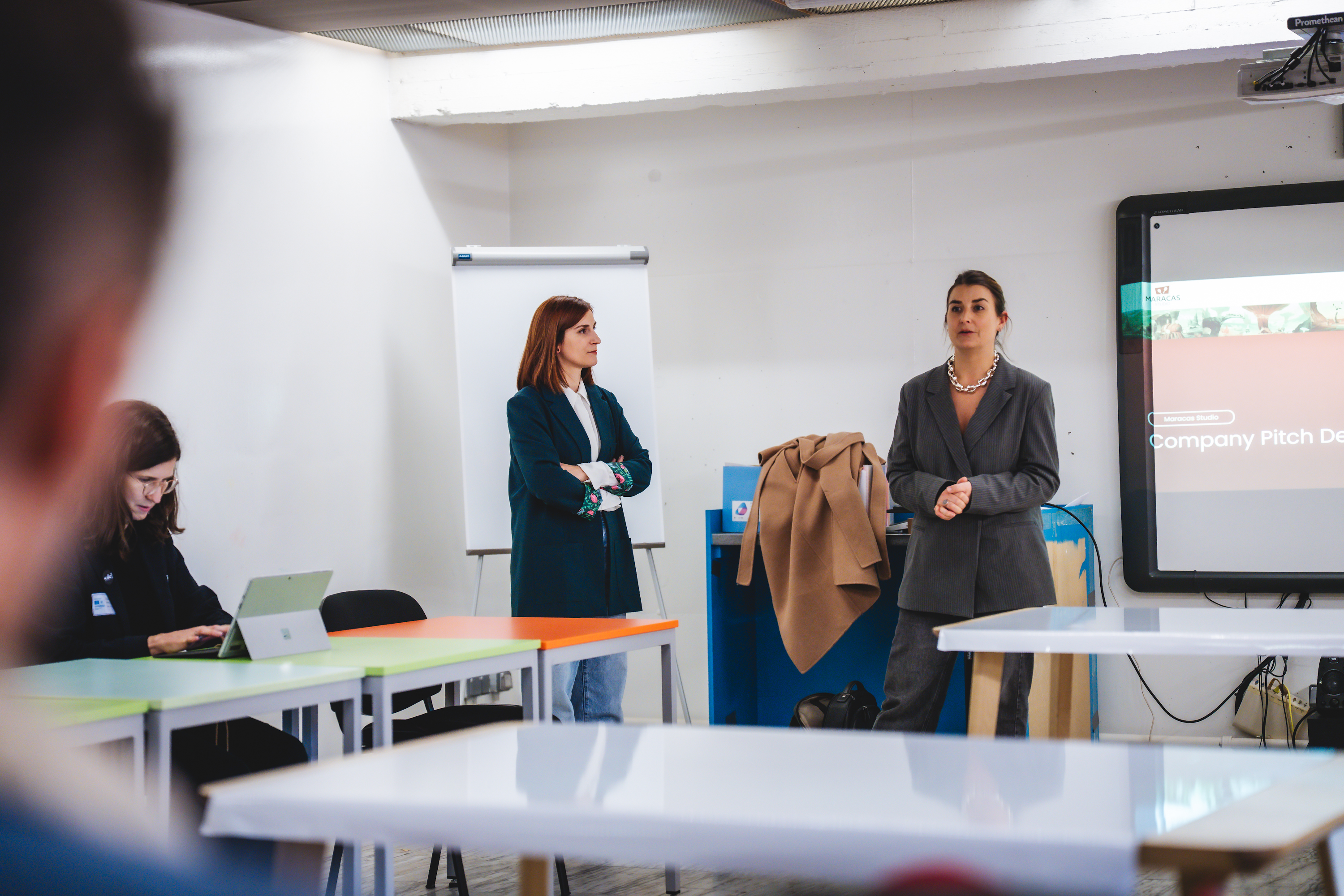
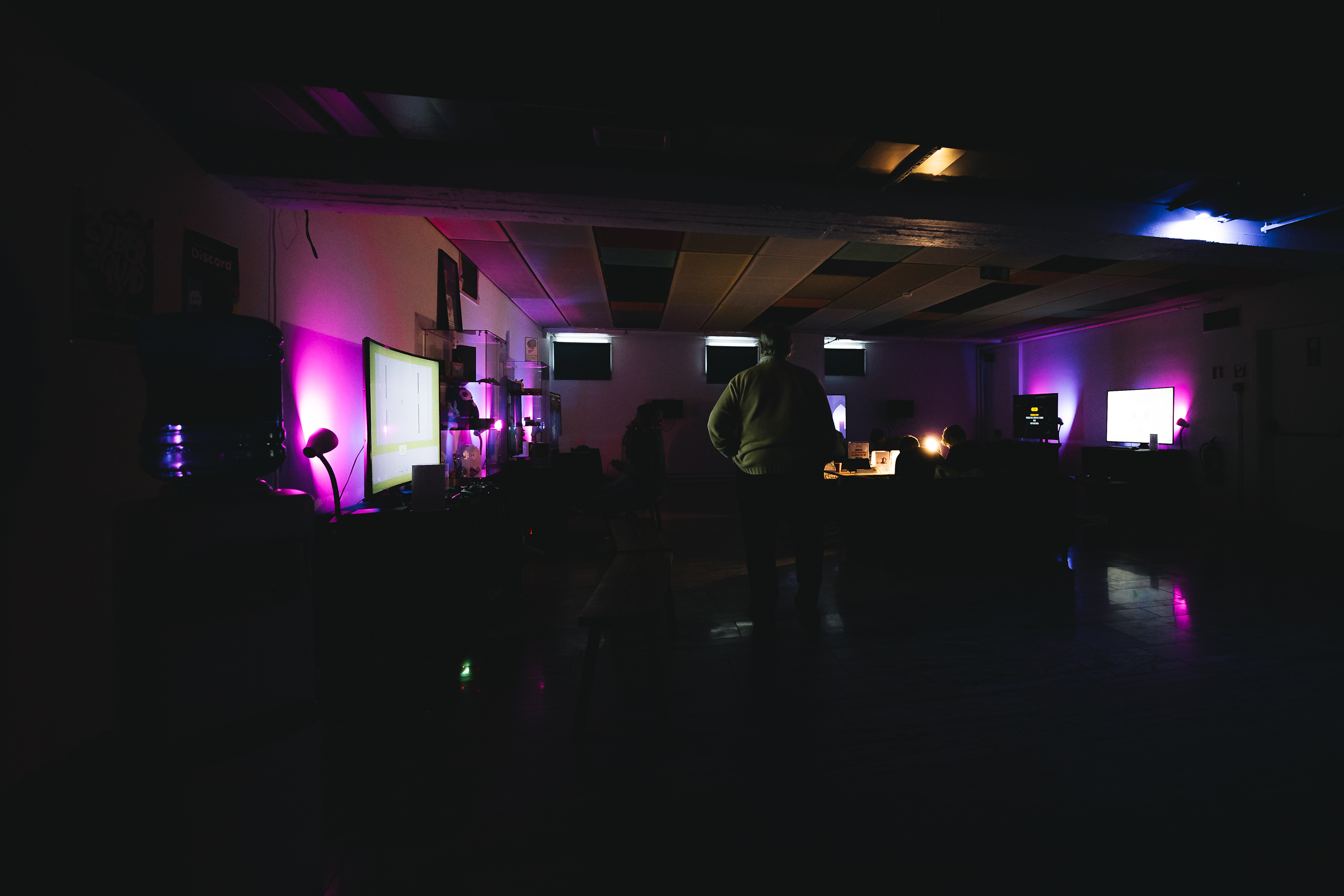
It would take until October 2025 and Wallonia’s presidency of the Greater Region Summit for a delegation of about fifteen representatives from the five regions to land at the KIKK festival, in collaboration with the Walloon Export Agency. A panel was held there where the idea of a digital creative hub across the Greater Region immediately found consensus. A few months later, wake! would be mandated by the Walloon Minister-President to lay the foundations of the Greater Creative Region.
The movement has neither legal status nor dedicated budget: “It’s not a nonprofit, it’s not a cluster, it’s not institutionalized, it’s a movement,” insists Delphine Jenart, speaking of a construction built “by capillarity.” Around wake!/KIKK gathered Hitt XR Wallonia on the Walloon side, the 1535° Creative Hub in Differdange on the Luxembourg side, the Région Grand Est Region on the French side, as well as K8 Institut für strategische Ästhetik gGmbH in Saarland and the Film und Medienforum in Rhineland-Palatinate on the German side, quickly joined by Dock 11 Saarland and the Ministry of the German-speaking Community of Belgium’s culture department.
“What’s new about the Greater Creative Region is establishing genuinely multilateral cooperation across the territory’s five sides for our creative industries and sectors,” continues Delphine Jenart. “Where collaborations often remain bilateral and sector-specific, the goal is to bring together technological, creative, cultural, academic and economic players around a shared ambition — to give rise to a creative market, but also a new zone of cooperation capable of producing shared projects, skills and narratives.”
8 structures, 4 countries, and just as many ways of turning creativity into an economy
What strikes anyone speaking with the steering group is the diversity of its members’ statuses: a territorial authority alongside grassroots operators, the private sector alongside government-mandated agencies.
In Luxembourg, the 1535° Creative Hub in Differdange was born of a political bet: transforming former ArcelorMittal industrial buildings, spanning 16,000 m², into an affordable venue for a still-fledgling creative industry. “The bet that was made 10, 15 years ago has really paid off,” notes Kristian Horsburgh, who now runs the site. 80 entities are housed there, around 480 jobs retained, compared with the 750 that ArcelorMittal still holds just next door. He defines the creative industry as “an industry with economic impact that produces intellectual property”, a deliberately broad definition that includes designers and coders as much as visual artists.
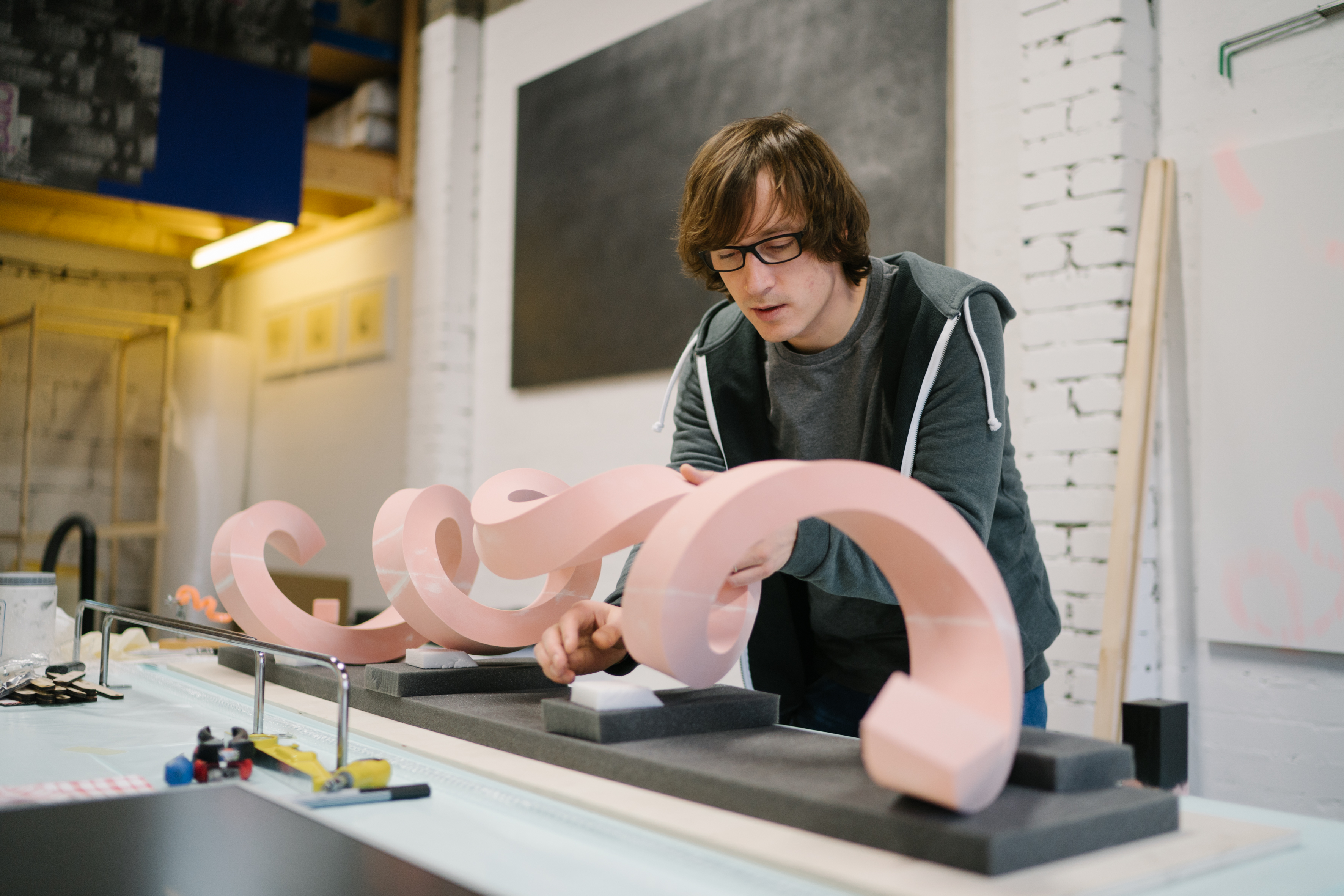
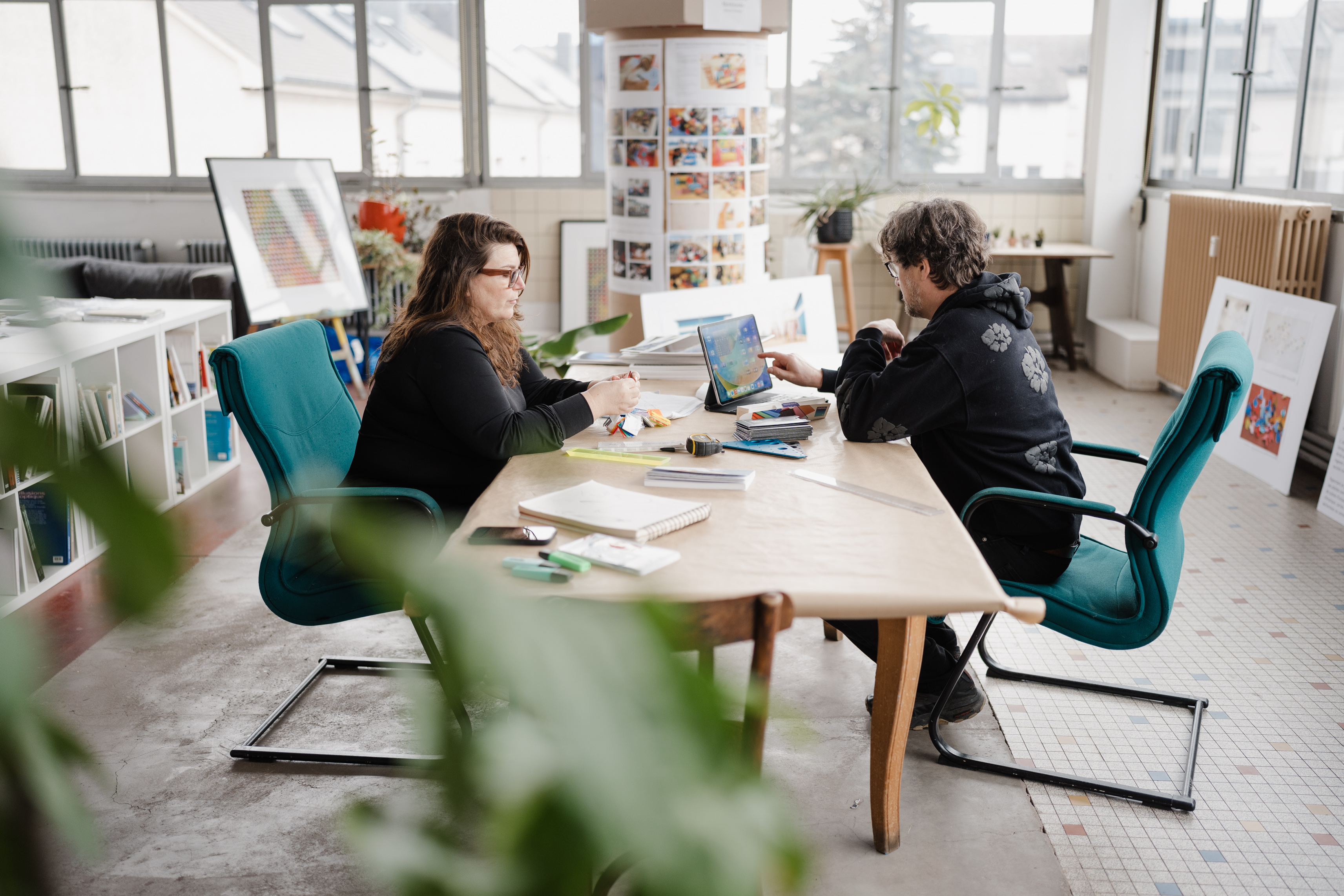
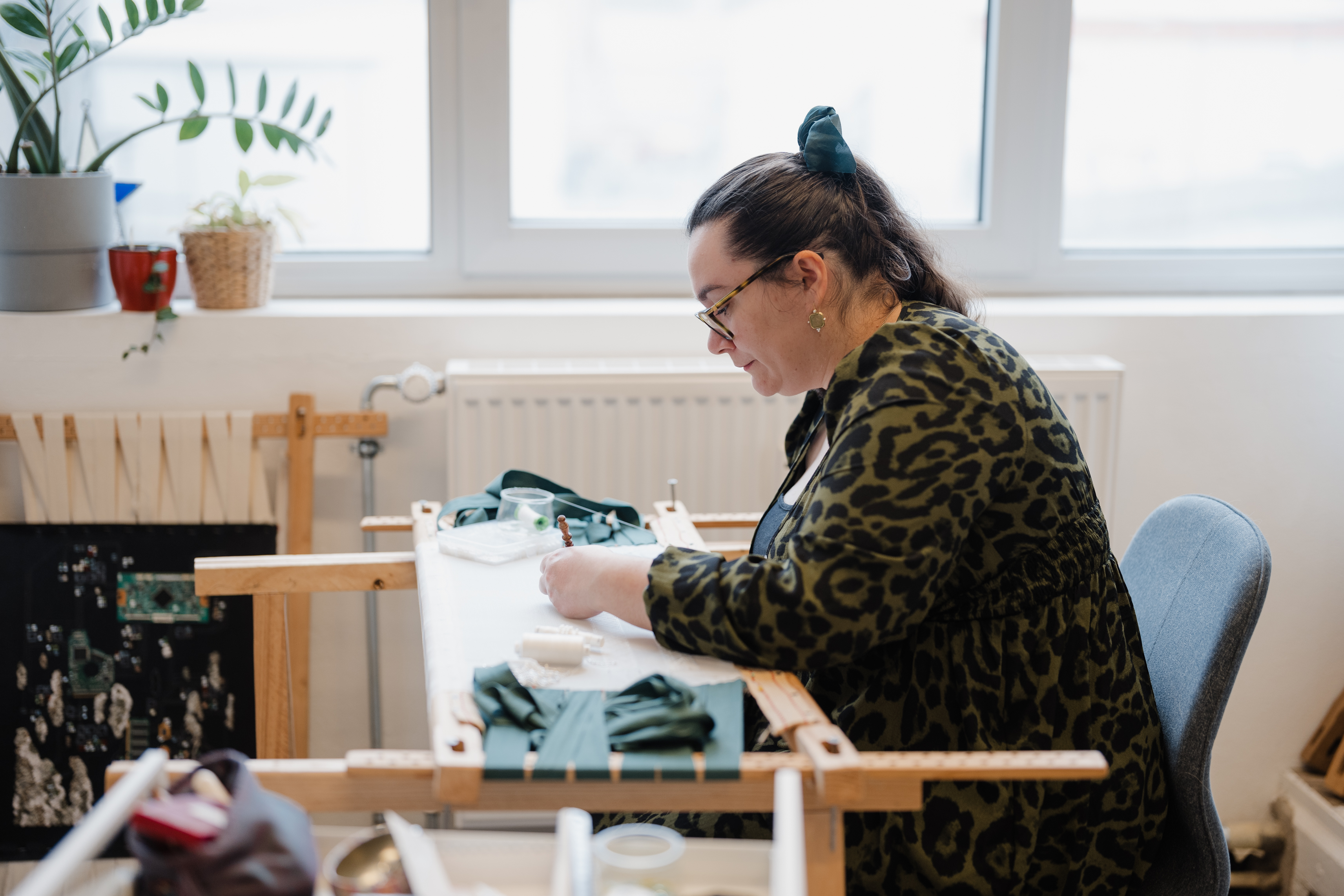
In Saarland, Dock11 plays a role comparable to wake!’s: mandated by the regional ministry of economy, it chose from the outset to focus on content production (online media, podcasts, video) rather than classic one-on-one consulting. “Telling the same story three times a day isn’t really effective,” sums up its director Lars Potyka, a former independent music industry lobbyist in Berlin. On the Greater Region, he offers a blunt diagnosis: for the past eight or ten years, attempts at cross-border rapprochement have never really taken hold. He wants to believe that this time, the conditions are finally right.
In Grand Est, it was first through Interreg programs that Marion Gravoulet, audiovisual and film project officer for the Region, structured cross-border cooperation, via the CinEuro Film Lab program. Born from cinema, the program saw immersive work added along the way — “I admit we twisted arms a bit sometimes,” she acknowledges. The Greater Creative Region reverses the logic: immersive work is the project’s very DNA from the outset. Grand Est notably brings the RICCI (International Meetings on Culture, Knowledge and Immersive Technology), a traveling professional gathering launched in 2021 in Metz, followed by Épinal and a new location in 2027, designed to connect regional scenes that are poorly linked to one another. She cites one example of this circulation: Oto’s Planet, a virtual reality work on ecology, led by a creative from Lorraine based at 1535° in Luxembourg, who made a point of teaming up with a composer from Lorraine — a work that has since toured widely around the world.
Sébastien Nahon: “The territory as a medium”
Within the steering committee, Sébastien Nahon holds an almost forward-looking position. The MIIL he coordinates is an interdisciplinary media lab at UCLouvain that studies how new technologies are used, involving their first users from the design stage onward. The lab works on two fronts: immersive and interactive experiences, and the intelligibility of large multimodal datasets, text, image, sound, video, for instance to make public archive collections more accessible.
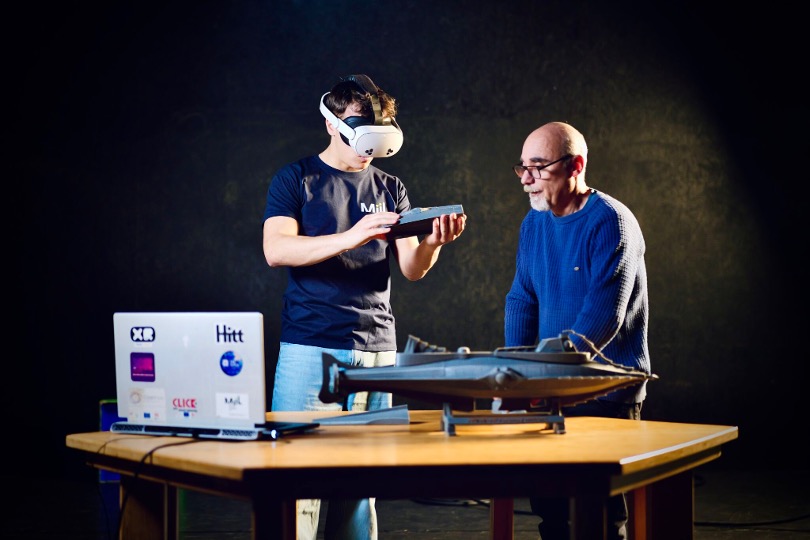
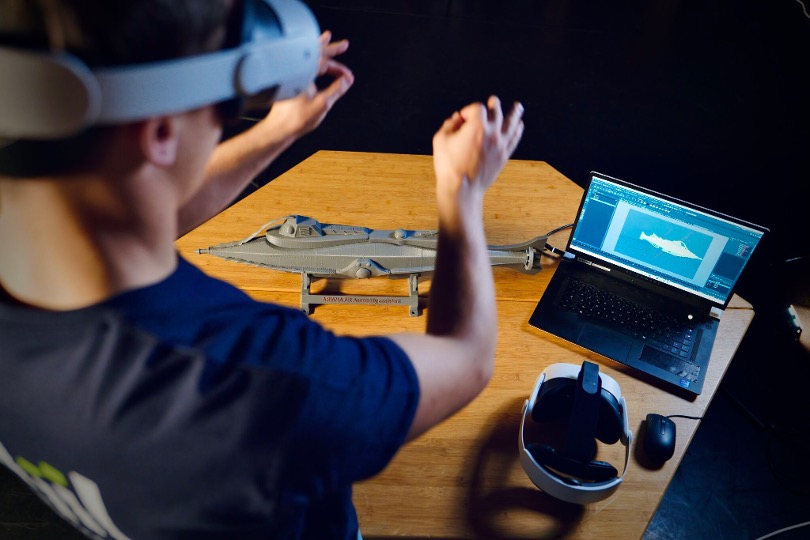
His role within the Greater Creative Region is to chart a vision. In concrete terms, this means providing a territorial framework that connects projects, and shining a light on a historical heritage and a spontaneous creativity that have largely remained invisible. Sébastien Nahon describes himself as a “committed inter-regionalist”: in his view, this micro-local network is a necessary condition for building a sovereign Europe. While large metropolises never need to justify their ties, small regions like Belgian Luxembourg, long overlooked, have everything to gain from rebuilding these connections.
His outlook can be summed up in one sentence: “The territory will become a medium.” He illustrates it with examples that already exist elsewhere: an augmented-reality trail through the Berlin underground recounting the Resistance, or an immersive podcast that lets listeners hear, in the streets of Paris, the events of the Holocaust. The idea: layering a digital, cultural and creative dimension over the territory, one that showcases a still-underused tangible and intangible heritage.
The challenges of a still-emerging ecosystem
Language, first, less a wall than a friction point. Marion Gravoulet and Sébastien Nahon both speak of a need for “translation” that goes beyond language itself: agreeing on what words like “creative,” “culture” or “industry” actually mean, definitions that vary from one country to another and where the European framework can help.
Funding, next. Kristian Horsburgh advocates for research, development and artistic innovation to be recognized on the same footing as those of conventional businesses, regretting that public funding eligibility criteria are ill-suited to the realities of the creative sector. Expanding access to dedicated European funding for creative industries is also a challenge: Wallonia can do better, according to Delphine Jenart, hence the motivation to invest in a partner platform to lean on, such as the Greater Creative Region.
Time and complexity, too. Marion Gravoulet points to a chronic lack of time among creators, torn between artistic work and the search for funding, hence the Region’s ambition to act as a facilitator. Sébastien Nahon accepts the flip side of the interdisciplinarity he champions: mixing different professional cultures slows projects down — “what could take six months ends up taking a year” — but he sees it as a necessary investment for more robust productions.
Mapping, finally, stands out as the priority and consensus project. “We only really talk about what we know”: Delphine and Kristian have made it the first concrete building block of the GCR, with the ambition of including a participatory and media component. Marion Gravoulet adds a practical dimension: better coordinating the calendar of the territory’s professional gatherings to maximize opportunities for professionals across the Greater Region to meet.
Gems already in motion
In Strasbourg, Random Bazar embodies, on its own scale, what cooperation can produce. Based at Le Shadok in Strasbourg, the outfit founded by Henri Morawski, Antoine Herren and Ange Capron champions video games as a popular art form in their own right, through an alternative video game label, participatory talks and outreach workshops. Far from big-budget productions, Random Bazar cultivates a deliberately low-tech, playful approach. A “pop cabinet of curiosities” that promotes video games as a space for socializing as much as an artistic medium.
In Rhineland-Palatinate, the trajectory of Media Apes illustrates another facet of the ecosystem. Based in Neustadt an der Weinstraße, this studio specializing in spatial sound and 3D audio has spent more than ten years working at the crossroads of sound production, research and immersive experiences. Its latest initiative, Holomentum, born from a partnership with the design studio WE Development, develops “narrative spaces” where architecture, image, sound and interaction combine — leading to projects presented at the SXSW festival. A trajectory worth comparing to SpheriX 360, from the studio Miam Miam Creative Lab, based at Le Pod in Louvain-la-Neuve.
Looking ahead to the next five years
Each member of the steering committee envisions their own definition of success, but they all converge on one shared refusal: that of abstraction.
Delphine Jenart sets out very concrete indicators: a significantly greater circulation of digital creators across the whole territory, programmed into the venues and festivals of each region, and European consortia able to raise larger amounts of funding by pooling their expertise. She adds a more structural goal, a shared method for multiplying private funding for the sector, and a more symbolic one: that the Greater Creative Region label be recognized as a genuine facilitator, economically, culturally and across borders.
Kristian Horsburgh shares this ambition but stresses the form governance should take: a rotating presidency where each region contributes its own specialty. Digital art and technology on the Walloon side, built heritage and its sustainable reconversion on the Luxembourg side, another focus still on the German side, without the movement becoming a permanent superstructure requiring everyone to stay continuously mobilized. He also advocates for a cascading funding mechanism that covers coordination costs without placing the entire burden on a single structure.
Marion Gravoulet, for her part, imagines a system of cross-residencies where each territory would play a different role (narrative writing, pure technological research, public engagement), with artists supported from one residency to the next, like a genuine project accelerator.
For Lars Potyka, success will be measured by the multiplication of practical exchange formats, cross-residencies, showcases organized on either side of the border, joint projects like jointly funded urban murals. “They need to gain something. Money, or something else, like at an exhibition, to get noticed,” he sums up, convinced that the movement needs to move past the “meta” level so that creatives and economic players actually join in.
Sébastien Nahon imagines traveling events that leave visitors not so much with a spectacular impression as with a retrospective sense of obviousness: “Why didn’t I think of that?” He regrets that there isn’t yet, at the scale of the Greater Region, a unifying gathering comparable to KIKK for Wallonia, a place or a traveling moment that, in his view, still needs to be invented.
But everyone also stresses the same risk to avoid: that the dynamic hardens into a new centralized superstructure, disconnected from the ground, where governance would no longer truly represent the needs of each territory.
As the rotating presidency of the Greater Region Summit turns, Wallonia is preparing to hand the baton to Luxembourg, which will take over coordination of the Greater Creative Region on January 1st. One thing, in any case, seems certain: the seed has been planted, and it has already begun to spread. With a manifesto, the establishment of a steering group and a shared charter, a communication platform, an “academics meetup” this autumn at the University of Namur, several professional gatherings at various events, culminating with KIKK 2026, and the hosting of the Greater Region’s inter-ministerial culture conference. And this is only the beginning!
A story, projects or an idea to share?
Suggest your content on kingkong.

also discover
Go with the flow of digital creativity, The Greater Creative Region is on the move!
From Belgium to Japan, the new territories of creative digital creativity
Stereopsia, the key European immersive technologies hub